
Domain Name Services Letter Expiration Notices: Urgent Warning! Beware of Sneaky Domain Scams
The Domain Name Services letter in the below image is a common type of domain expiration notice that many businesses receive in the mail. While these notices may seem official and urgent, it’s important to understand that they’re often a sleezy form of solicitation.
These letters typically come from third-party companies hoping to lure you away from your current domain registrar with the promise of better deals or additional services. They often use scare tactics, implying that your domain might be lost if you don’t act quickly.

This is Not a Bill – It’s a Trap!
Important Note: Never put your credit card information on these types of letters. They often include a payment stub, but remember, this is not a bill. If you have any questions or concerns about your domain registration, always contact your current domain provider directly. They are the ones authorized to manage your domain and process renewals.
Don’t let the payment slip or official-sounding language fool you. These notices are carefully designed to mimic invoices, but they are, in fact, solicitations disguised as urgent renewal reminders. Never, under any circumstances, provide your credit card information on these forms. Doing so could expose you to fraudulent charges and unauthorized domain transfers.
What Does the Better Business Bureau (BBB) Have to Say?
The Better Business Bureau (BBB) has received reports that Internet Domain Name Services (IDNS) engages in a deceptive invoice scheme. IDNS sends letters that look like invoices to businesses, claiming that the business’s domain name will expire soon. The letters pressure businesses into paying a high fee to renew their domain name with IDNS. However, legitimate domain registrars charge much less.
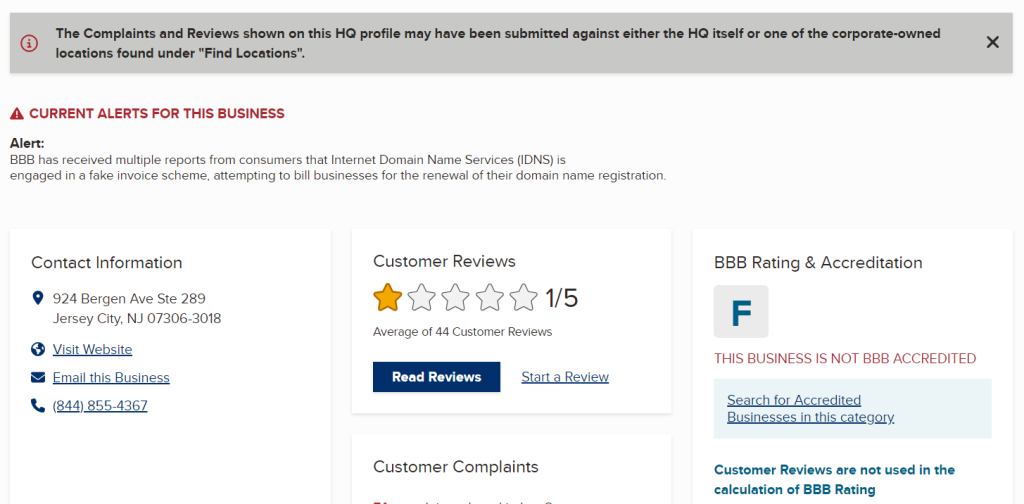
View The BBB’s Urent Warning Here
The BBB has an urgent warning for businesses about IDNS’s deceptive practices. If you receive a letter from IDNS, do not pay the fee. Instead, contact your current domain registrar to renew your domain name.
How to Identify a Domain Name Services Letter Scam?
| Red flag on the letter | What it actually means |
|---|---|
| Arrives by post as a printed notice | Your real registrar contacts you by email, at the address on the domain record. |
| Words like expiration notice or final notice | Manufactured urgency. Check the true expiry date in your registrar account instead. |
| Small print reading this is not a bill | A legal disclaimer that lets a solicitation look like an invoice. It is the clearest single tell. |
| Company name you do not recognise | You renew with the registrar you bought from. If the name is unfamiliar, you have no relationship with them. |
| Price far above the going rate | Typical domain renewals are single or low double digit dollars per year. |
| Pays for a listing or search engine submission | Not a renewal at all. Search engines do not charge for inclusion. |
Navigating the digital landscape can be tricky, and unfortunately, scammers are always looking for ways to exploit businesses. One common tactic is through deceptive domain renewal notices. These seemingly urgent letters often contain several red flags that scream “scam!” Let’s break down some telltale signs to help you identify and avoid these traps:
- High-Pressure Tactics: The language in these notices is often designed to create a sense of urgency, pressuring you into making a hasty decision. Phrases like “You must renew your domain to retain exclusive rights” or “failure to renew may result in loss of your online identity” are meant to scare you into immediate action.
- Vague Company Details: Scammers often use generic names like “Domain Name Services” and provide mismatched domain names in their contact information. The letter in question mentions “util.com” but redirects to “domainservices.us,” a clear inconsistency.
- Missing Contact Information: Legitimate companies will provide clear contact information, including a phone number. If the notice lacks essential contact details, it’s a red flag.
- Suspicious Terms and Fees: The fees quoted in these notices are typically higher than standard renewal rates. Plus, they may try to lock you into a long-term commitment, such as a five-year renewal.
- Misleading Addressing: Scammers often address the notice to your domain name rather than your company name, making it seem less personal and more like a mass mailing.
- Premature Expiration Dates: These notices often arrive months before your actual domain expiration date, hoping to catch you off guard and exploit your lack of awareness.
- Better Business Bureau Complaints: If you’re unsure about the legitimacy of a company, check their reputation with the Better Business Bureau. A history of complaints and negative reviews is a major red flag.
Remember, your domain is a valuable asset. Protect it by staying vigilant and informed. If you receive a suspicious notice, contact your current domain registrar directly for clarification.
Don’t let scammers steal your peace of mind, and your domain!
I Don’t Know Who My Domain Provider Is, How Do I Find It?
No worries, it happens! Finding your domain provider is easy.
- Visit the ICANN Lookup website
- Enter your domain name: Type in your website address (e.g., www.yourbusiness.com)
- Click “Lookup”
You’ll see your domain provider listed under “Registrar.” You’ll also find other useful info like when your domain was registered and when it expires.
Remember: Keep your contact information updated with your domain provider so you don’t miss important renewal notices!
Protect Your Domain, Protect Your Business
Your domain name is a vital component of your online presence. Safeguarding it requires vigilance and proactive measures. If you receive any unsolicited communication about your domain, take immediate action:
- Verify the Sender: Scrutinize the notice carefully. Is it truly from your current registrar? If not, exercise extreme caution.
- Read the Fine Print: Pay close attention to any disclaimers or language indicating that the notice is not a bill.
- Contact Your Registrar: If you have any doubts whatsoever, reach out to your current registrar directly through their official channels. They will provide accurate information about your domain’s status and any necessary renewals.
The Muon Recommendation: Bulletproof Your Technical Foundation
Scams like this work because most business owners have a messy Technical Foundation. They bought a domain five years ago, don’t remember where it is, and panic when they see a letter.
We don’t believe in “patchwork” tech. We believe in stability.
We recommend SiteGround for both Hosting and Domain Registration.
If you are tired of wondering where your assets live, move them to SiteGround. Here is why we trust them for the Technical Foundation of our clients:
1. Centralized Management: Stop splitting your brain between a registrar (where you bought the name) and a host (where your files live). SiteGround handles both seamlessly. You log in once, and you control everything.
2. User-Friendly DNS: Most registrars make changing DNS records a nightmare of confuse UIs. SiteGround makes it intuitive. If you need to point your domain to landing pages or verify a Google Business Profile, you can do it without an IT degree.
3. Elite Security & Support: The “typical agency” solution is cheap, shared hosting that crashes when you get traffic. SiteGround offers top-tier security and support that actually answers the phone. They monitor for threats so you don’t have to.
4. No “Gotcha” Pricing: Unlike the scammers sending you mail, SiteGround is transparent. No hidden transfer fees, no fake expiration notices.
Stay Informed, Stay Vigilant
Remember, knowledge is your best defense. By staying informed and taking proactive measures, you can protect your domain and avoid falling victim to these sneaky scams.
Remember, knowledge is power. By understanding these tactics and taking proactive steps to safeguard your domain, you can ensure your business remains secure and thrives in the digital landscape. If you need assistance with your local SEO or online presence, don’t hesitate to contact us. We’re here to help you navigate the complexities and achieve your business goals.
FAQs to Clear Your Doubts
1. Are domain name services legitimate?
Yes, domain name services are generally legitimate. They play a crucial role in connecting your chosen domain name with your website’s IP address, making it accessible to users online.
2. How can I identify a legitimate domain name service?
Look for accreditation from the Internet Corporation for Assigned Names and Numbers (ICANN). ICANN-accredited registrars adhere to strict guidelines, ensuring they offer reliable and secure services.
3. What are some red flags to watch out for?
Beware of unsolicited offers, hidden fees, and high-pressure sales tactics. These can be signs of scams or unscrupulous providers trying to take advantage of you.
4. How do I choose a reputable domain name service?
Prioritize ICANN accreditation, transparent pricing, responsive customer support, and additional features like domain privacy protection.
5. What should I do if I receive an unsolicited domain renewal notice?
Verify the sender, read the fine print carefully, and contact your current registrar directly if you have any doubts. But in most cases, throw that letter away! Never provide your credit card information on such notices.
Can You Help Me?
Absolutely! At Muon Marketing, we’re dedicated to helping local businesses thrive online. We understand that navigating the complexities of the digital world can be challenging, especially when it comes to protecting your valuable assets like your domain name.
If you’ve received a suspicious domain notice or have any questions about your online presence, do feel free to reach out to us. Our team of experts is here to provide guidance and support.